Competitive Arguments on Demand – Not Battlecards Nobody Uses
Only ~26% of reps use battlecards. Genow delivers competitive arguments on demand – tailored to the specific requirement, not a generic card.
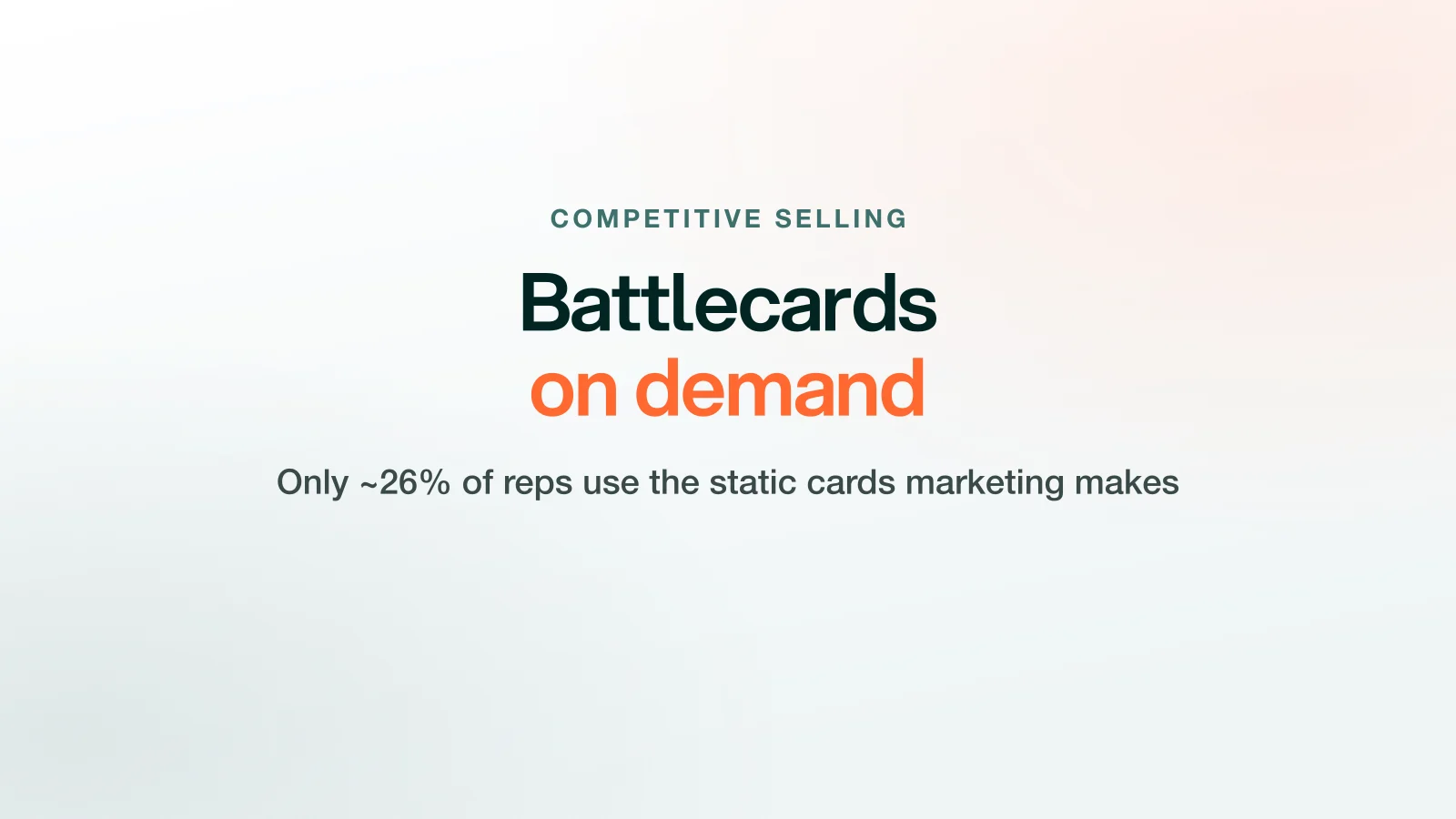
Instead of static battlecards that go unused, Genow delivers competitive arguments on demand: the agent combines current research from public competitive sources with product knowledge and the specific customer requirement and produces the fitting argument in the deal context. Only about 26% of reps use the battlecards their marketing makes – dynamic, in-context arguments solve the adoption problem.
The battlecard paradox
Battlecards work: research suggests good competitive material can lift win rates by roughly 20–30%. Yet only about 26% of reps use the cards their marketing creates. The reason isn’t a lack of need but the format: a generic, static card is rarely exactly what’s needed in the specific conversation – and it goes stale fast.
So demand for competitive arguments is real and proven, but static delivery fails. That’s exactly the gap.
Arguments that fit the requirement
In the deal workspace, the agent knows who you’re competing against, what the customer needs, and which product was matched. From that, it produces the argument on demand:
-
Name the competitor – in the intake or by voice in the conversation.
-
Pull current intel: via research across public competitive sources.
-
Combine with your own product knowledge and the matched solution.
-
Tailor to this buyer’s specific requirement – not generic.
-
Output as a spoken answer or finished argument – available on the road.
So the argument isn’t “off the shelf” but tailored to the moment – and because it draws on your own product knowledge plus fixed competitor sources, it’s evidenced rather than a generic model platitude.
| Static battlecard | Argument on demand (Genow) |
|---|---|
| Generic for all deals | Tailored to buyer & requirement |
| Goes stale quickly | Current research from public sources |
| Barely used (~26%) | Available in the conversation, even by voice |
| Sits in the enablement portal | Created in the deal context, with sources |
Why “on demand” solves adoption
Reps want the answer and the material fast – they won’t hunt through sources. Tools that feel like admin get rejected (CRM adoption fails 50–63%). By having the rep simply request the argument and the agent deliver it, “a chore nobody uses” becomes a delegated task that actually helps in the conversation. Voice as the entry point reinforces this, because speaking is roughly 3× faster than typing.
Part of the whole deal
Competitive arguments are the “sell it the right way” half of the value proposition. They’re created in the same workspace as product matching, buyer research, and materials – from one agent, grounded in real product data and public competitive sources. This is exactly the combination manufacturers of complex products ask for: materials generation, instant sales arguments, and competitive research.
FAQ
Why do so few reps use battlecards?
Only about 26% use their marketing's cards – not from lack of need, but because of format: generic, static cards rarely fit the conversation exactly and go stale fast.
How does Genow generate arguments on demand?
The agent combines current research from public competitive sources with product knowledge and the buyer's specific requirement and delivers the fitting argument in the deal context – even by voice.
Are the arguments evidenced?
Yes. They draw on your own product knowledge and fixed competitor sources, not generic model platitudes. The currency of competitor claims should be checked before the customer meeting.
Do competitive arguments really raise win rates?
Studies point to roughly 20–30% higher win rates with good battlecards. What matters is that they get used – which dynamic, in-context arguments make easier.