Rolling Out an AI Sales Workspace: The 60-Day Playbook (Live From Day 1)
Step by step to an agent-native sales workspace: connected not migrated, live from day 1, in daily use within 60 days.
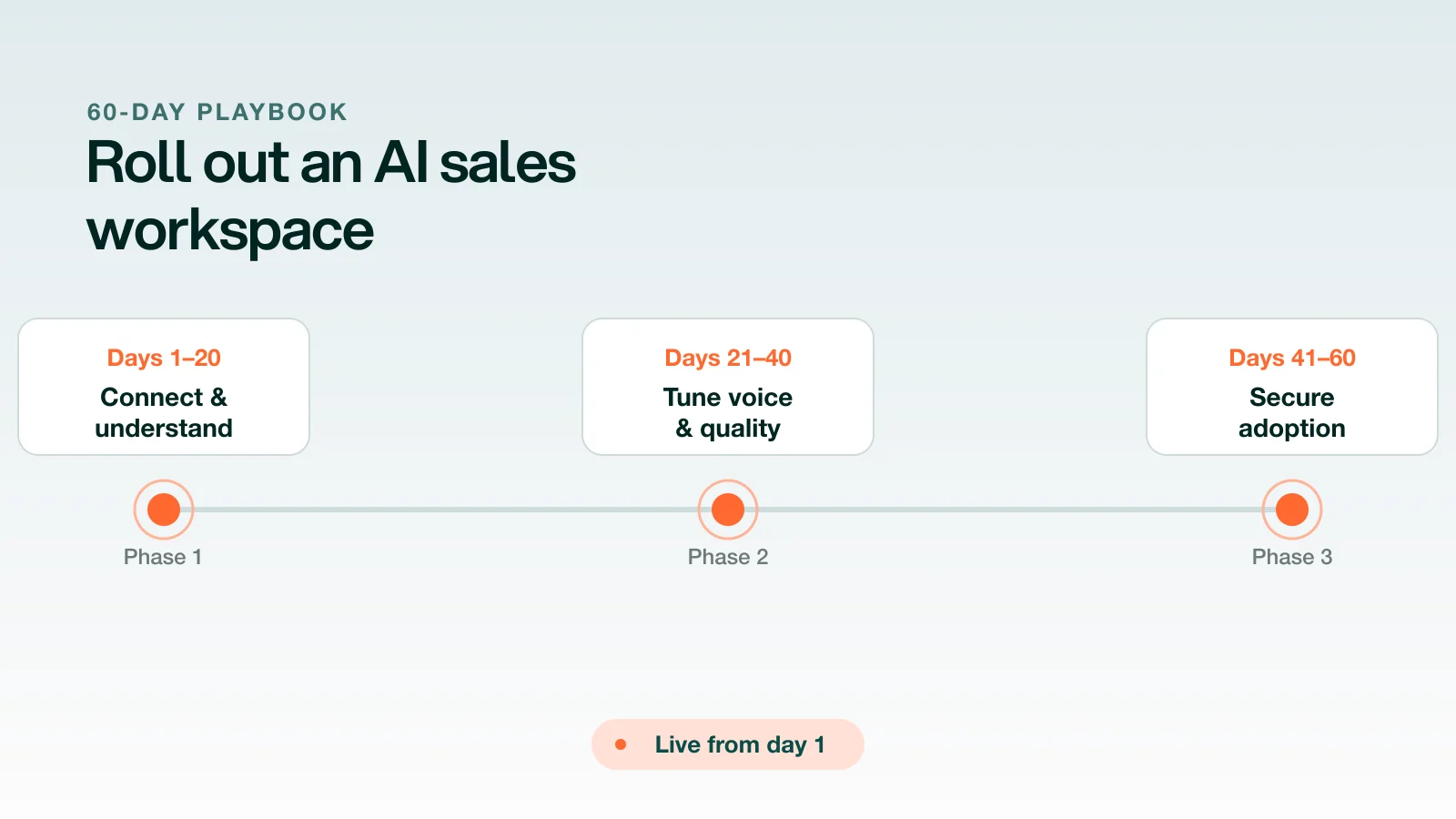
An AI sales workspace can be in daily use in about 60 days – with no data migration. The principle is “connected, not migrated”: the agent is connected to existing sources (product knowledge, options database, price lists) and is live from day 1. This playbook splits the rollout into three phases: connect & understand (days 1–20), tune to your voice (days 21–40), secure adoption (days 41–60).
Why integration needn’t be a blocker
The most common worry before an AI sales tool is: “This will be a months-long IT project.” In fact, connecting document sources is the easy part today – connectors for SharePoint, Drive, Confluence, etc. already exist. The real work lies in connecting the structured systems and capturing the surrounding logic (glossaries, schemas, validity rules).
A fixed-price entry and a clearly bounded first product family keep the project lean.
Phase 1 (days 1–20): connect & understand
-
Choose a first product family where value becomes visible fast – the starting point for a pilot team.
-
Connect document sources such as SharePoint, Drive or Confluence – in-app, with minimal IT effort.
-
Connect structured systems: option and variant databases, price lists and legacy systems.
-
Capture business logic and context: glossary, product schema and validity rules – everything that makes answers factually right.
-
Inherit permissions: everyone sees only what they’re already allowed to – the agent inherits access rights from your source systems.
Outcome: The agent interprets the first product field and finds the right configuration for every customer requirement. Matching is live from day 1 – initially for a pilot team.
Phase 2 (days 21–40): tune tonality & quality
-
Build verified reference cases: real requests from your data and past deals, confirmed by experts.
-
Measure match quality against these reference cases and optimize until it reaches the required bar.
-
Adapt arguments and materials to your house voice: templates, language, tone.
-
Set the research scope: which public sources the agent uses for competitor research.
-
Define the escalation path to engineering – native and context-rich in the workspace, not a separate email thread.
Outcome: provably correct matches and materials that sound like your company – the foundation of trust in front of buyers.
Phase 3 (days 41–60): secure adoption
-
Expand the rollout: from the pilot team to more reps; bring inside sales and application engineers in as power users.
-
Establish voice as the entry point – around three times faster than typing, available on mobile and by voice straight from the field.
-
Delegate instead of maintain: the agent does the work; the workspace fills with finished results instead of to-dos.
-
Anchor KPIs: match quality, time to quote, share of long-tail products sold and demo-to-deal rate.
-
Keep it fresh: maintain product data and arguments in a fixed routine.
Outcome: the workspace is anchored in daily work – not “another tool,” but delegated work reps adopt willingly.
Why adoption decides success
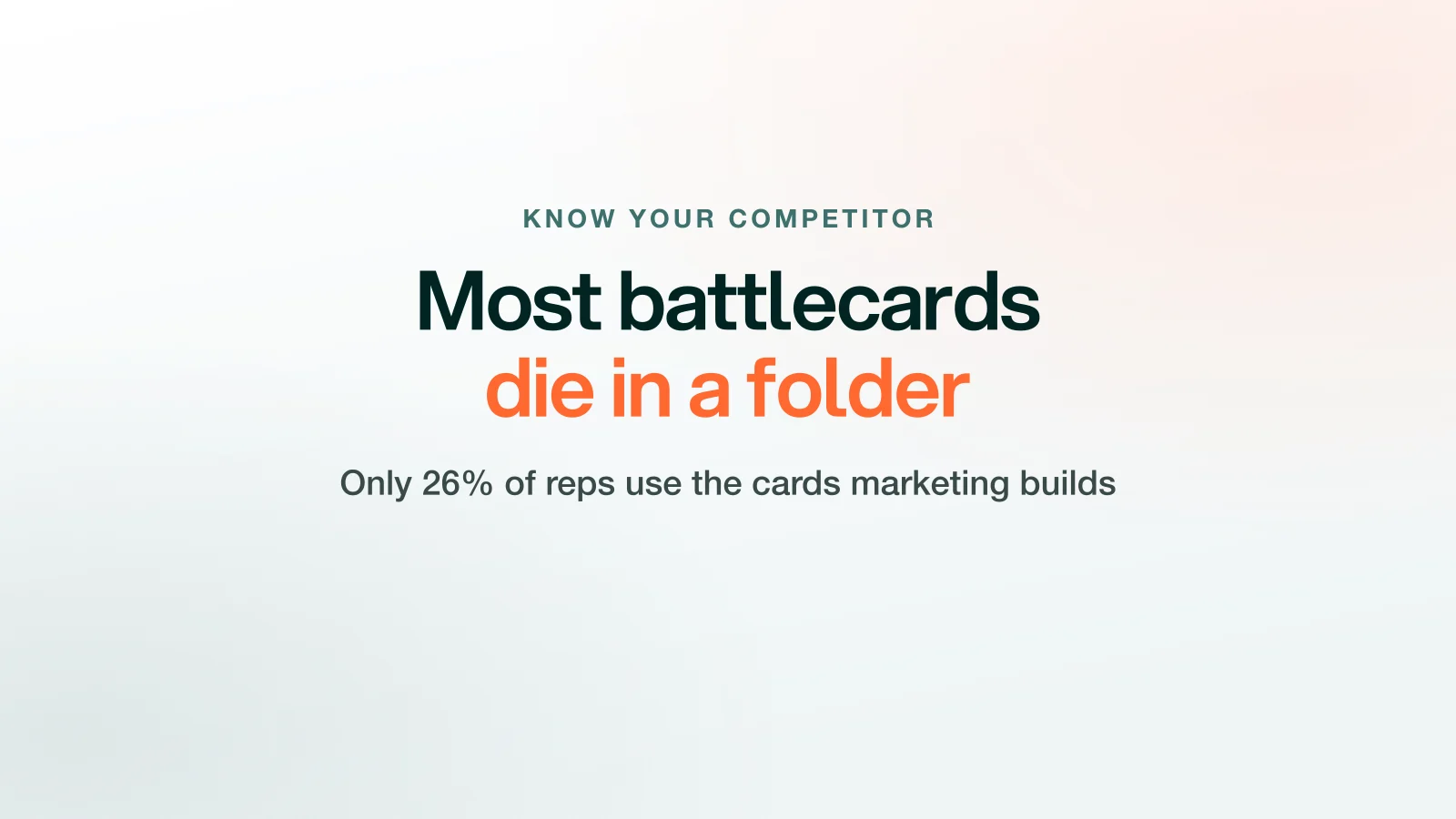
CRM rollouts fail 50–63% because tools feel like admin; only about 26% of reps use their marketing’s battlecards. The agent-native approach flips this: instead of maintaining data, the rep delegates steps. Voice lowers the entry barrier further. That’s why phase 3 is the core of success.
| Phase | Window | Key milestone |
|---|---|---|
| 1 Connect & understand | Days 1–20 | Matching live for one product family |
| 2 Tune | Days 21–40 | Tune tonality & quality |
| 3 Adoption | Days 41–60 | Anchored in daily work, KPIs running |
FAQ
How long does rollout really take?
With the “connected, not migrated” approach, matching is live from day 1 and anchored in daily work in about 60 days – starting with a clearly bounded first product family.
Do we have to migrate data?
No. The agent connects to existing sources (product knowledge, options database, price lists). That keeps the project lean and fast.
How do we secure adoption?
Through delegation over maintenance, voice as the entry point, and bringing inside sales/application engineers in as power users – plus clear KPIs.