Context Engine
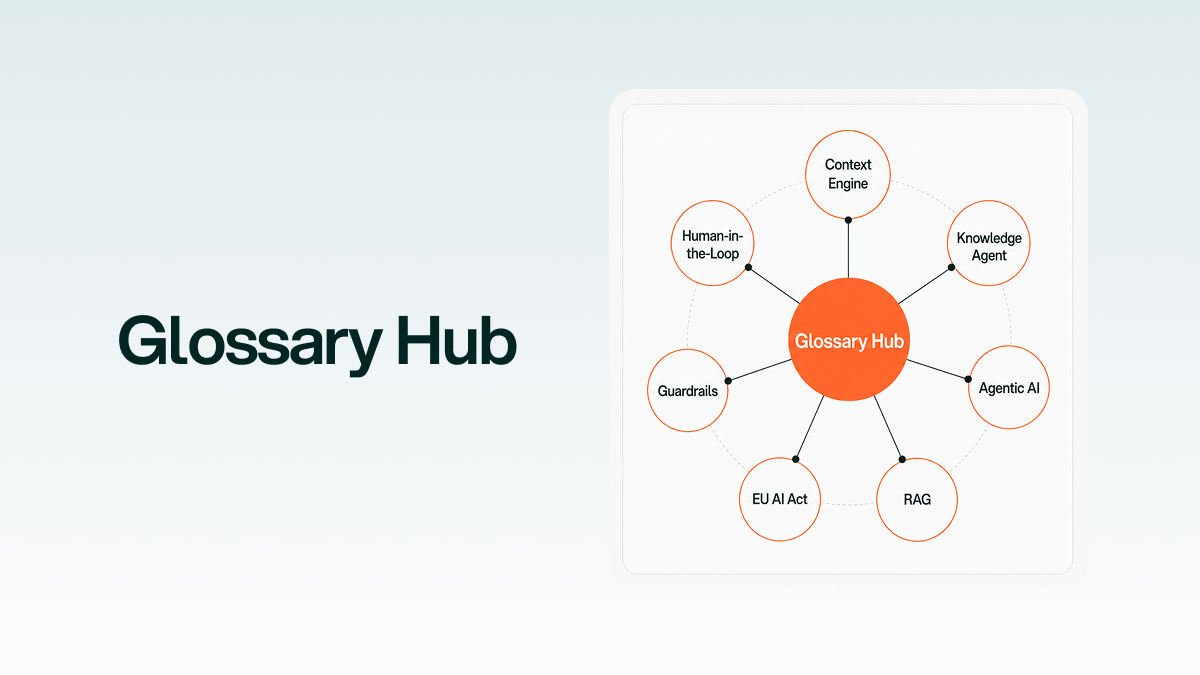
The Context Engine is the core component of a Precision Enterprise AI platform. It extracts content from enterprise sources, classifies and versions it, attaches metadata and citations, and exposes the resulting context to specialised agents. Unlike plain Retrieval-Augmented Generation, a Context Engine respects permissions, validity, source quality and domain semantics so agents deliver reliable answers with traceable provenance.
The Context Engine understands the company's products, data points, and all relevant stakeholders, making it the key differentiator in a RAG-based knowledge product. Genow fully implements these requirements, ensuring high-quality results.
Knowledge Agent
A knowledge agent is a specialised AI agent (for example Genow) grounded in a validated knowledge base that supports a scoped business process — service, proposal or product configuration. Knowledge agents cite sources, flag uncertainty, and integrate with line-of-business tools like CRM, ticketing or production dashboards.
Agentic AI
Agentic AI refers to AI systems that don't just answer questions but actively act — querying data, invoking tools, making decisions in workflows. In enterprise contexts always with human oversight, clear guardrails and audit trails.
Precision Enterprise AI
Category term for enterprise AI platforms that combine domain-specific agents, validated data, EU-compliant sovereignty, measurable business KPIs and cross-domain orchestration.
Retrieval-Augmented Generation (RAG)
Architecture pattern where a large language model retrieves relevant documents from an external knowledge base before generating an answer. RAG is a component of a Context Engine but not synonymous with it.
High-risk AI (EU AI Act)
Systems that pose significant risks to safety or fundamental rights under the EU AI Act. Most enterprise use cases are not in this category but are subject to transparency and documentation duties.
Data sovereignty
Control over where data is stored, accessed and processed. Critical for European companies: EU hosting, no training on customer data by third parties, clear audit chains.
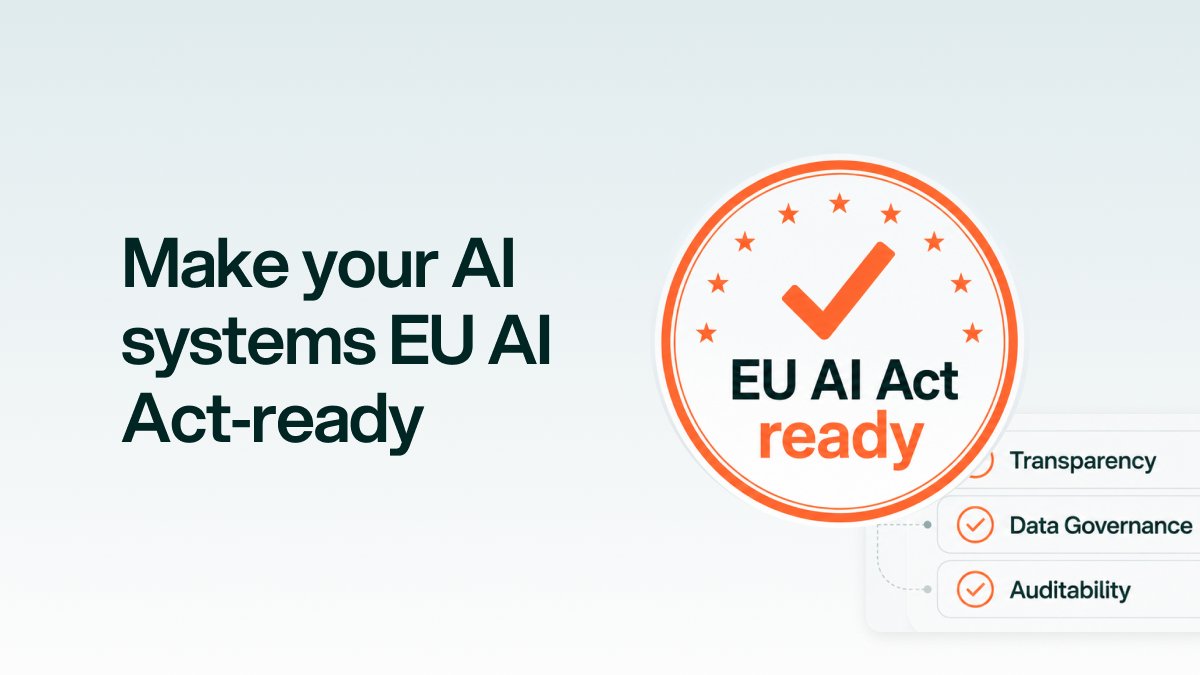
EU AI Act
European regulation for AI systems, in force since 2024, phased application. Addresses risks via four classes (unacceptable, high, limited, minimal).
Audit trail
Audit-proof logging of sources, prompts and versions used for an answer. Mandatory for compliance-critical use cases.
Time-to-value (TtV)
Time from project start to measurable business outcome. In Precision Enterprise AI typically 6–12 weeks for the first agent.
Skill (AI agent skill)
Bundled set of prompts, tools and workflow logic for a concrete business task. Skills are reusable building blocks of an agent platform.
Knowledge Twin
Metaphor for a central, AI-driven representation of enterprise knowledge. A competing concept to the Context Engine architecture.
Orchestration
Coordination of multiple skills or agents across business-unit boundaries so a user can trigger several downstream processes from a single query.
Guardrails
Technical and organisational limits on an agent's behaviour — topic filters, escalation rules, roles and data access.
Human-in-the-loop
Principle where a human oversees, approves or corrects the agent at defined process points. Core to any enterprise AI governance.