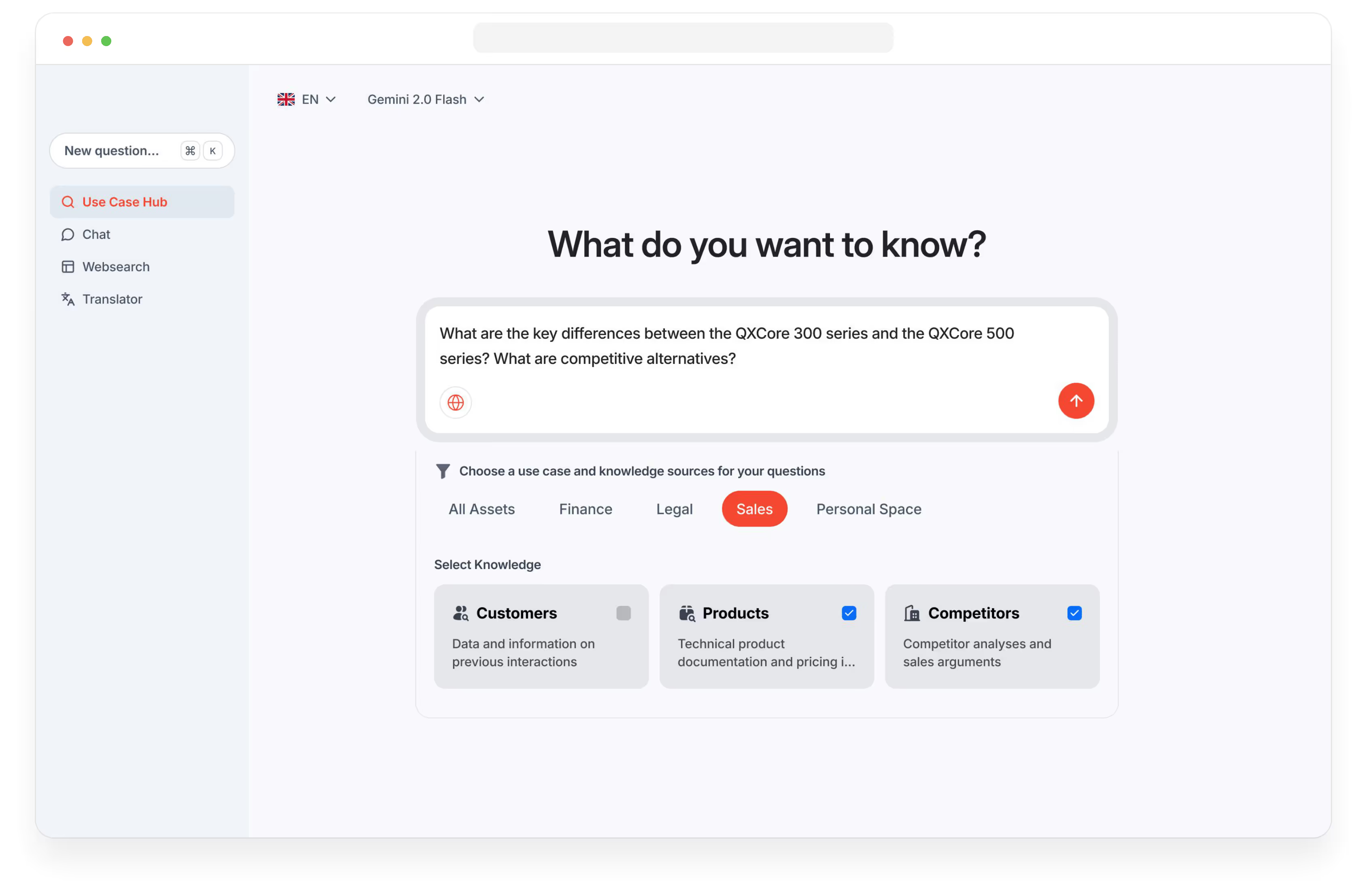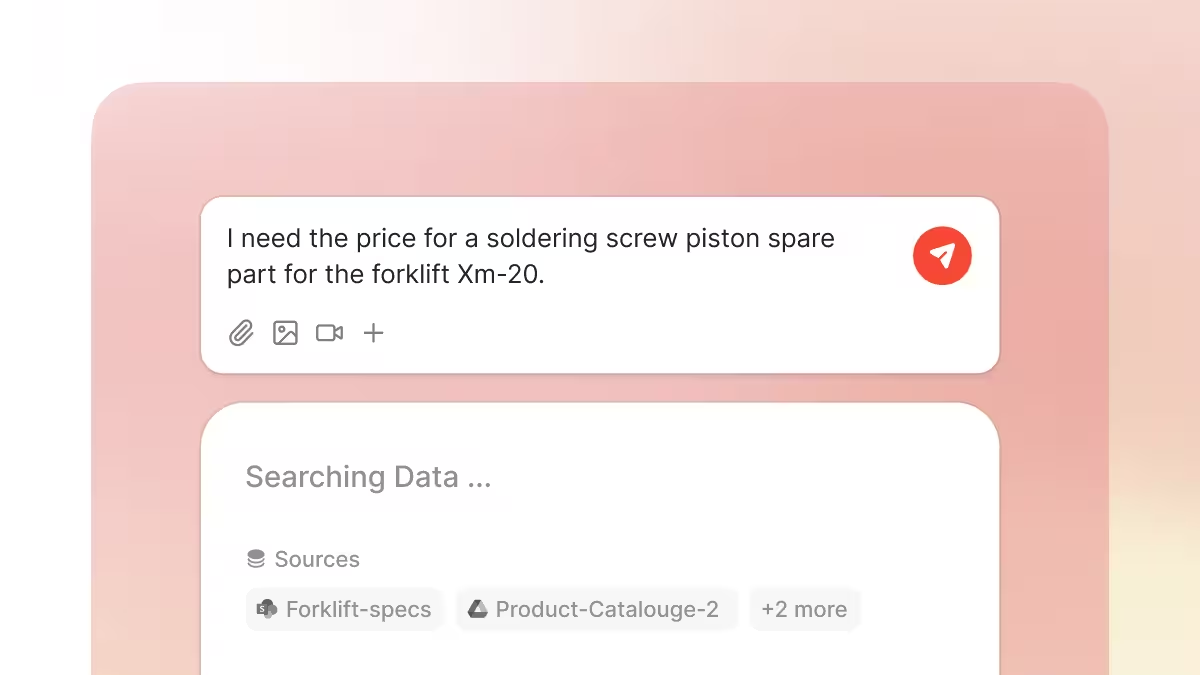
What is a product knowledge agent?
A product knowledge agent turns datasheets, variants, certificates, compatibility matrices and historical proposals into a single citable knowledge base for sales and service. Result: proposals ship two to three days earlier, cross-sell up 8–12%, sharp drop in questions to product management.
The problem: product complexity beats sales capacity
B2B manufacturers typically carry hundreds of variants per product family, region-specific certificates and constantly evolving compatibility requirements. Sales spends up to 30% of its time searching and asking product management. Result: slow proposals, wrong configurations, missed cross-sell.
Solution architecture
The agent rests on four pillars: data sources (datasheets in PDF, PIM, CRM opportunities, configuration rules, certificate database), Context Engine (extraction, versioning, citation chain), skill layer (search, configuration, proposal, compatibility skills), interaction layer (CRM sidebar, configurator UI, Teams, mobile). Every answer is tied to a validated source.
Key data sources
PIM or master product database in current revision. Datasheets and marketing collateral per region and language. CRM opportunity history with proposal outcomes. Configuration and pricing rules. Certificates and regulatory documents. Historical RFPs and won proposals as learning signal.
Use cases that move the needle
Inside sales: drastic reduction in search time, structured proposal building blocks. Field sales: real-time answers to customer questions without call-backs. Service: compatibility checks on spare-parts queries. Partner or e-commerce portal: self-service answers that reduce support load.
Integration with CRM and the sales process
The agent lives as a sidebar in Salesforce or HubSpot, pulls opportunity context, suggests matching products, drafts proposals and logs every interaction. Sales leadership gets reliable metrics: how many proposals, which products, what win rates.
ROI view
Typical mid-market patterns: 25–35% shorter proposal cycle, 8–12% higher cross-sell, 15% more opportunities processed per rep, sharp reduction in product-management queries. For a 20-person sales team that equals two to three FTE of additional capacity.
Roll-out in 8–10 weeks
Week 1–2: scope, data audit, KPI fix.
Week 3–5: PIM, CRM, certificates integration.
Week 6–7: 10-rep pilot.
Week 8–10: roll-out, enablement, operations hand-over.
FAQ
How does the agent handle constantly changing product data?
Through PIM integration and versioning inside the Context Engine. Changes reach the answer base within minutes.
Does it support multilingual catalogues?
Yes. Sources are tagged by language and region; answers respect the query context.
Can the agent generate proposals directly?
Yes. With the right skill configuration it drafts proposals in Word or CRM for sales to finalise.


.avif)
.avif)
.avif)